
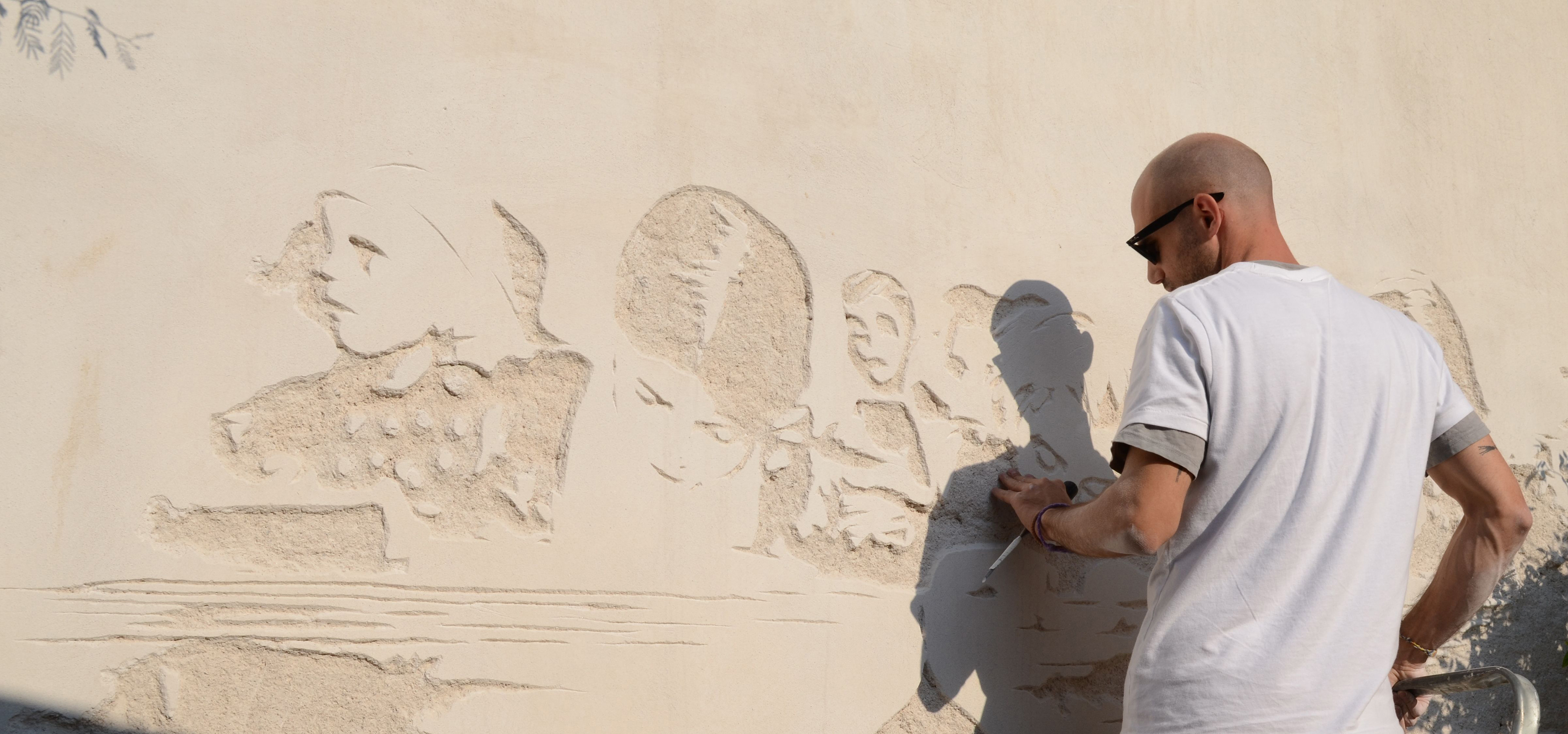
My work explores the relationship between destruction and creation. Using engraving as my primary method, I remove material rather than add to it—carving, cutting, and eroding surfaces until images emerge from within the object itself. Through this subtractive process, the artwork becomes inseparable from the material that carries it. The image is not applied; it is revealed.
Trained as an architect, I approach art through structure, material logic, and spatial thinking. Architecture taught me that form is inseparable from the forces that shape it, and this idea translates directly into my practice. Each surface—wood, plexiglass, or found object—has its own internal architecture. By engraving into it, I intervene in that structure, allowing hidden patterns, figures, and textures to emerge.
My visual language combines dense detail with a tension between realism and abstraction. Figures, textures, and symbols often appear suspended between recognition and fragmentation. This reflects my interest in how images form in the mind: partially constructed, partially discovered. The process itself is physical and sensory. Engraving involves pressure, vibration, resistance, sound, and the smell of the material as it is cut. These elements become part of the work, echoing architectural processes where materials are shaped through force and craft.
Growing up in Athens and being immersed in street culture—skateboarding, graffiti, and urban environments—also shaped my approach to surfaces and marks. The city became an early canvas, and the idea of intervention in existing structures remains central to my practice. Ultimately, my work is about revealing what lies beneath the surface. By subtracting material, I expose layers of meaning embedded in the object itself. Destruction becomes a constructive act—an excavation of form, memory, and image.